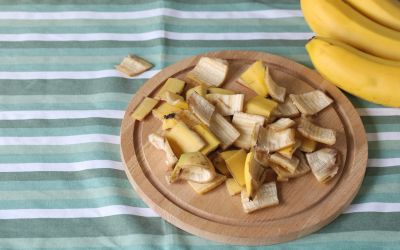
How to Use Banana Peels in Your Cannabis Garden
Discover the Natural Benefits of Banana Peels in Your Cannabis Garden
Bananas are one of the most commonly consumed fruits in the world, but after the fruit is eaten, the peel usually ends up in the trash.
For gardeners, however, banana peels can have another use.
Banana peels contain organic matter along with several nutrients that plants require throughout their life cycle. When properly composted, brewed into a mild liquid amendment, or dried and ground into powder, banana peels can be recycled back into the garden.
For cannabis growers interested in organic gardening, this raises an interesting question:
Can banana peels actually be used as fertilizer for cannabis plants?
The answer is yes, but with an important qualification. Banana peels should not be considered a complete fertilizer. Instead, they can serve as a supplemental source of organic material and certain plant nutrients.
🎥 Watch the full video: How to Use Banana Peels in Your Cannabis Garden
https://www.youtube.com/watch?v=NsVB5vjCvlw
What Nutrients Are in Banana Peels?
Banana peels contain several nutrients that can contribute to plant growth as the organic material decomposes.
Perhaps the nutrient most commonly associated with bananas is potassium.
Potassium plays an important role in plant physiology. Plants use potassium to regulate water balance, activate enzymes, transport sugars, and support numerous metabolic processes.
For cannabis plants, potassium becomes particularly important during flowering, when the plant is transporting carbohydrates and supporting the development of flowers.
Banana peels also contain smaller amounts of several other important nutrients.
Phosphorus
Phosphorus is involved in energy transfer within plant cells and is a component of ATP, one of the primary molecules cells use to store and transfer energy.
Phosphorus also contributes to root development, genetic material, and the formation of new plant tissue.
Calcium
Calcium is important for plant structure.
It helps strengthen cell walls and contributes to the development of new roots, stems, and leaves. Calcium also participates in cellular signaling mechanisms that help plants respond to environmental conditions.
Magnesium
Magnesium plays a particularly important role in photosynthesis because it is located at the center of the chlorophyll molecule.
Chlorophyll allows plants to absorb light energy and use that energy to produce carbohydrates through photosynthesis.
Trace Elements
Banana peels can also contain trace elements including:
- Manganese
- Iron
- Copper
- Zinc
These elements participate in various enzymatic and metabolic processes within plants.
However, simply having these nutrients inside a banana peel does not mean they are immediately available to your cannabis plants.
First, the peel has to break down.
How Long Do Banana Peels Take to Decompose?
Organic fertilizers work differently from readily soluble mineral fertilizers.
When a banana peel enters soil or compost, microorganisms such as bacteria and fungi begin breaking down its plant tissues.
As the organic material decomposes, nutrients stored within the peel gradually become incorporated into the surrounding soil and organic matter.
Under good composting conditions, banana peels may break down considerably within approximately two to five weeks.
When whole or chopped peels are buried directly in garden soil, decomposition can take considerably longer, sometimes around one to three months.
The actual decomposition rate depends on several environmental factors, including:
- Temperature
- Moisture
- Oxygen availability
- Microbial activity
Warm, moist, biologically active soil generally breaks down organic matter faster than cold or poorly aerated soil.
This is one reason simply placing an entire banana peel underneath a cannabis plant will not instantly provide the plant with potassium or other nutrients.
The soil ecosystem must first process that material.
3 Ways to Use Banana Peels in a Cannabis Garden
There are several ways gardeners can recycle banana peels.
Three of the most common approaches are banana peel tea, composting, and dried banana peel powder.
1. Banana Peel Tea
Banana peel tea is one of the simplest ways to experiment with banana peels in the garden.
The basic idea involves chopping banana peels into smaller pieces and soaking them in water for approximately 24 to 48 hours.
During this period, some water-soluble compounds and minerals from the peel can move into the surrounding water.
The resulting liquid can then be used when watering plants.
Banana peel tea is sometimes described online as a powerful fertilizer, but it is better to think of it as a mild supplemental amendment.
It does not contain the balanced concentrations of nitrogen, phosphorus, potassium, calcium, magnesium, and micronutrients that cannabis plants require throughout an entire growing cycle.
For that reason, banana peel tea should complement an established nutrient program rather than replace one.
2. Compost Banana Peels
For many gardeners, composting is one of the most practical ways to recycle banana peels.
Banana peels contribute organic material to a compost pile where bacteria, fungi, and other decomposers gradually break them down.
They can be combined with dry carbon-rich materials such as:
- Dried leaves
- Cardboard
- Straw
A properly maintained compost pile allows banana peels to decompose alongside many different organic materials.
Over time, those materials are transformed into a more stable organic amendment that can improve soil structure, water retention, microbial activity, and nutrient availability.
Composting also has an advantage over burying large pieces of fresh banana peel directly beside a cannabis plant.
By allowing decomposition to occur within the compost system first, much of the raw organic material has already been processed before it reaches your grow medium.
3. Make Dried Banana Peel Powder
Another interesting method involves drying banana peels and grinding them into small particles.
Reducing the peel into powder dramatically increases its surface area, giving soil microorganisms more material to colonize.
There are several ways to dry banana peels.
Sun Drying
Cut banana peels into strips and place them on a tray or drying screen in direct sunlight.
Under warm and dry conditions, the peels may dry within approximately two to three days.
Turning them periodically can help them dry more evenly.
Oven Drying
Banana peels can also be dried in an oven.
Cut the peels into smaller pieces and spread them across a baking sheet.
At a relatively low oven temperature of approximately 200°F, they may become dry and brittle within roughly one to two hours, depending on their thickness and moisture content.
Using a Food Dehydrator
A food dehydrator provides steady airflow and controlled heat.
At approximately 125°F to 135°F, banana peels may require around six to twelve hours to become completely dry.
Once the peel is brittle, it can be ground using a:
- Blender
- Coffee grinder
- Food processor
The finished banana peel powder can then be incorporated into soil or applied lightly as a top dressing.
Remember that this remains an organic material.
The powder does not instantly become plant food the moment it touches the soil. Microorganisms still need time to decompose the particles and release nutrients into forms that plant roots can absorb.
Should You Bury Whole Banana Peels Around Cannabis Plants?
You can bury banana peels in soil, but that doesn't necessarily make it the best approach.
Large pieces of fresh organic matter can take months to decompose.
They can also potentially contribute to odors or attract insects and other organisms while breaking down.
Chopping the peel into smaller pieces will increase the available surface area, but composting the material first or drying and grinding it into powder generally gives growers greater control over how the material is introduced into the garden.
Can Banana Peels Keep Pests Away?
Banana peels are sometimes promoted as a natural pest repellent.
Some gardeners place small pieces of banana peel around plants in an attempt to discourage pests such as aphids.
There are also theories that changing aphid activity could indirectly influence ants because certain ant species interact closely with aphids and consume the sugary honeydew they produce.
However, banana peels should not be relied upon as a primary pest-control method.
If they are used at all for this purpose, they are better viewed as a minor component of a broader integrated pest management strategy.
Monitoring plants, maintaining a clean growing environment, controlling environmental conditions, and responding quickly when pests appear remain much more important.
Are Banana Peels the Best Fertilizer for Cannabis Plants?
Despite what you may encounter online, banana peels are not a miracle fertilizer.
They also aren't a complete cannabis nutrient program.
What makes them interesting is their ability to turn something normally considered kitchen waste into useful organic material.
Banana peels contain potassium along with phosphorus, calcium, magnesium, and several trace elements. Once microorganisms break the material down, some of those nutrients can become part of the soil nutrient cycle.
That makes banana peels best viewed as a supplemental organic amendment rather than a replacement for balanced plant nutrition.
Cannabis plants require different concentrations of nutrients throughout germination, vegetative growth, flowering, and maturation.
No single kitchen scrap can provide everything the plant needs.
Turning Kitchen Waste Into Garden Soil
One of the most useful lessons behind banana peel fertilizer isn't necessarily about bananas at all.
It is about understanding the nutrient cycle.
Plants absorb minerals from the soil and incorporate those elements into their tissues. When organic plant material dies and decomposes, microorganisms break those tissues apart and gradually return nutrients to the ecosystem.
Composting essentially allows gardeners to participate in this natural recycling process.
Instead of throwing banana peels into the garbage, they can be combined with other organic materials and eventually returned to the garden.
For cannabis growers interested in building biologically active soils and reducing household waste, banana peels can therefore serve as one small piece of a much larger organic gardening system.
Want to see the science and different methods explained in greater detail?
In our complete video, we explore the nutrients found inside banana peels, how long they take to decompose, different ways growers can prepare them, and whether banana peels really deserve their reputation as a natural fertilizer.
🍌 Watch the full video here: